Rapidus is Japan’s Best Bet. Will That Be Enough?
A semiconductor hail mary.
2025-08-06(Wed) 19:00 AST
First, a history
Japan has fallen on hard times since the asset bubble burst in 1990. It is now generally recognized that Japan has lost the technological edge in R&D that it enjoyed back then, and one area where this has hit particularly hard is semiconductors.
In 1986, Japan controlled around 46% of all semiconductor manufacturing, and 80% of DRAM manufacturing. Of the 10 biggest semiconductor manufacturers that year, 7 were Japanese. Forced into action by lobbying from companies like Intel and Texas Instruments, the US government began harsh measures on Japan, invoking Section 301 of the 1974 Trade Act and imposing sanctions until an agreement was later reached. The agreement mandated that Japanese companies no longer engage in ill-defined “dumping” and raise the prices of their products, as well as limit exports.
This agreement was compounded when the bubble began bursting, limiting R&D funding for these companies. American companies clawed back market share from their Japanese competitors, and Korean and Taiwanese companies not burdened by any restrictions began filling the void. By the time the agreement expired in 1996, Japanese companies found themselves outwitted, with not much they could do. Consolidation was attempted, leading to the creation of Elpida Memory in 1999 from the semiconductor manufacturing branches of Hitachi, NEC, and later Mitsubishi. To a degree this was successful, but it was short-lived. The company mismanaged its reaction to the Global Financial Crisis, and the sharp appreciation of the yen further limited its options. Elpida went bankrupt in 2012.
The semiconductor industry is exemplary of the wider state of Japan and its technological ambitions, such that evidence exists that the US cracked down particularly hard on semiconductors in their wider trade disputes with Japan for that very reason. Yet it is also one of the few industries where Japan could plausibly get its strength once again. Japan still has the talent: in 2022, the market share of Japanese companies in semiconductor equipment manufacturing was 30%, and in semiconductor materials, 50%. Japan still has companies like Tokyo Electron, Nikon, Shin-Etsu Chemical, and JSR Corporation, all of which have key roles in the global semiconductor supply chain. What Japan needs to do is fill in the gaps in the other parts of the chain; something that is much easier said than done.
Before I begin, I would like to disclose a statement of bias: I like Japan, I like underdogs, and I would like to see Rapidus succeed. Please take everything here with a grain of salt and keep that bias in mind. Everyone is biased, but I try to be as little biased as I can.
The Hope
If you wanted to reestablish yourself in the semiconductor industry, it would look something like Rapidus.
Rapidus was born out of the Kishida Cabinet’s “Big-Boned Policy” of 2022, a term referring to an annual list of fiscal and economic policies drafted by the government. The Policy that year covered many things, but a specific section piqued the interests of the stagnating Japanese semiconductor industry:
Examine ways of providing support, including capital reinforcement, to private companies that will play a leading role in the development and implementation of technologies indispensable for the next generation … [based] on the agreement between the leaders of Japan and the US, establish a foundation for the design and manufacture of next-generation semiconductors in the late 2020s, in addition to expanding the infrastructure for advanced semiconductors and fostering human resources.
The agreement in question is the “Basic Principles for Semiconductor Cooperation” between Minister of Economy, Trade and Industry Koichi Hagiuda and Secretary of Commerce Gina Raimondo. The Basic Principles stipulated that Japan and the US would cooperate on the basis of open markets and enhancing supply-chain resilience between the two countries. The Basic Principles and the later Policy would create impetus within the Japanese government to pressure domestic companies to work together; said impetus resulting in the creation of Rapidus in August 2022, with support from 8 major Japanese companies, including the ever-present SoftBank.
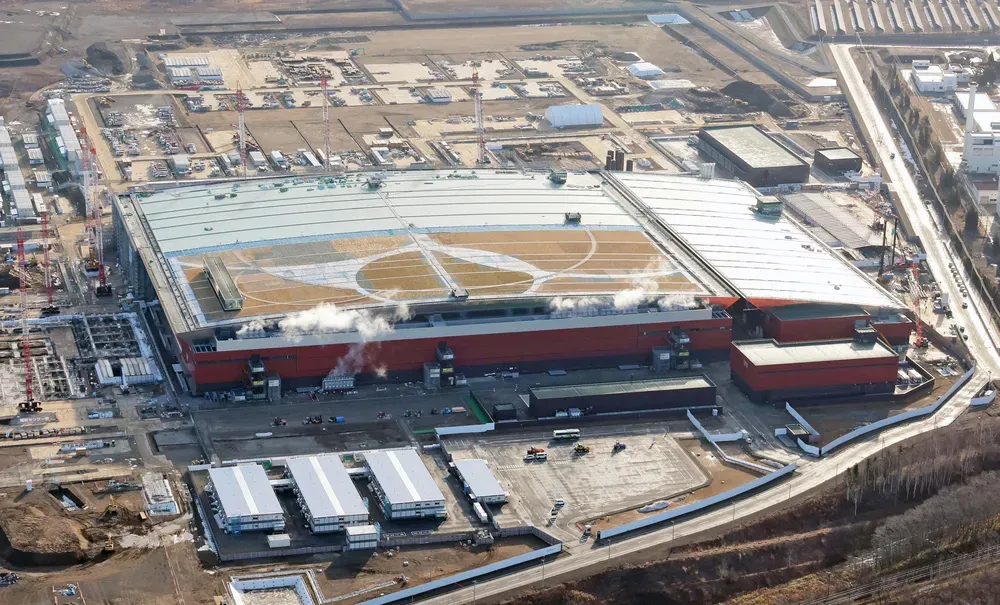
Things progressed rapidly from there. In November, Rapidus secured support from METI. In December, METI established the Leading-edge Semiconductor Technology Center, or LSTC, which immediately began collaborating with Rapidus. That same month, Belgian IMEC and American IBM would also initiate collaboration with the company; IBM in particular lending its GAA FET technology to Rapidus, and Rapidus sending its staff to IBM’s facility in Albany, New York. In February 2023, Rapidus chose Chitose in Hokkaido as the site of its plant. The company was boosted when it acquired EUV machinery from ASML in December 2024. Pilot line production began in April 2025, and the company’s first real milestone was hit in July when it unveiled a 2nm prototype.
The biggest problem for Rapidus, especially early on, was acquiring not only talent but young talent. Rapidus was initially mocked on Japanese social media for being a “club for old men,” but has successfully grown; from 14 employees when the company was founded in August 2022 to around a thousand now, 800 of whom are fully salaried and have pension insurance. This means a stable growth of anywhere between 27–33 employees a month, which is more impressive when you compare it with other Japanese semiconductor companies, which have extremely fluctuating rates of hiring depending on the amount of new graduates. If this rate continues as it mostly has over the past three years, Rapidus will hit its goal of having two thousand employees by the start of mass production in 2027.
As for the age problem, the median age of Rapidus employees is still high, at around 48. Compare with TSMC’s 36 and you’ll see the problem. However, this is a decline from when the company was founded, when the median was above 50. Rapidus is slowly succeeding in attracting young graduates in their 20s, including some talent acquired from the United States. It remains to be seen if Rapidus can continue to bring its median age down, but the trajectory is positive.
The Cope
The company’s timeline has been insane no matter how you look at it. In just three years, Rapidus has gone from nothing to 2nm chips. IBM has aided in this endeavour, and having the backing of the world’s first company to produce a 2nm chip is significant, alongside collaboration across the entire Japanese semiconductor industry as well as the government; but if this were TSMC or Samsung, it would have taken much more time, and they were starting from an existing base.
The shortcut that Rapidus has taken is to forgo the batch processing that TSMC and Samsung use in favour of what is called a single-wafer method. Rather than processing multiple wafers simultaneously, a single wafer is processed one at a time. This results in a higher yield (meaning more quality per chip) but far lower production volumes.
This presents an inherent problem. Rapidus’s chips are likely to be of higher yield than TSMC’s or Samsung’s, but they will also produce far less of them, and sell those chips for much more than either competitor, while TSMC and Samsung plan on beginning mass production this year and Rapidus not until 2027.
There are a few lanes for Rapidus here. As discussed by its CEO and by others in the semiconductor industry, Rapidus could play the part of a bleeding-edge fab, producing highly specialized chips for specific customers. This is also a benefit of the single-wafer method, which allows more variety in what is produced at a time. Rapidus could also be planning to expand once it reaches profitability, and that right now its moves are more about establishing its presence in the market. Any move, however, is going to be risky in the short term. Whatever direction the company takes to address the competition problem will likely become clear when it reveals the technical specifications of its prototypes, which it has not yet done.
The second problem is funding. In theory, Rapidus is a private company, backed by 8 other private companies, with the government providing aid. In practice, the vast majority of funding has come from the government.
On one hand, this is not surprising. Readers familiar with the history of TSMC will know it faced the exact same issue early on, and the Japanese private sector is known to no longer take many risks, which betting on Rapidus certainly is. On the other hand, this makes Rapidus look more like another Japanese government-backed top-down industrial project. If you are familiar with the history of those, I do not need to elaborate.
Rapidus estimates it needs 5 trillion yen for mass production by 2027; in three years it has acquired 2 trillion yen, meaning the company is struggling to meet its funding targets. Almost all of that 2 trillion has come from the Japanese government, and it is looking like the remaining 3 trillion will too, as embattled Prime Minister Shigeru Ishiba has promised additional spending of 10 trillion yen in the semiconductor industry by 2030, with some of it likely to go to Rapidus.
This leaves Rapidus at the mercy of the Japanese government. I personally believe the government will step in regardless of what happens, but it does mean that if Ishiba falls and is replaced by a prime minister more inclined toward fiscal discipline, Rapidus will be in trouble. The company will need to prove that private companies can invest in it and that it will not remain permanently unprofitable.
The third problem is competition. While it is rumoured that Samsung internally does not believe Rapidus to be a threat, the same cannot be said for TSMC. The company has significantly escalated its push for talent recruitment inside Japan. In April of this year, the month Rapidus announced test line production, TSMC hired a net 500 new engineers through its Japanese joint venture, JASM. This represents the biggest shift inside the Japanese semiconductor industry in some time.
Two months later in June, TSMC announced its first collaboration with a university outside of Taiwan, establishing the TSMC–UTokyo Lab with the University of Tokyo, not far from the previously mentioned LSTC. It doesn’t look like Rapidus is unaware of this either, as just one month after that announcement, LSTC announced it would begin to train 200 new design engineers.
While I was writing this, news broke that TSMC has launched legal proceedings against two of its current engineers alongside one former engineer. These engineers have been accused of abusing TSMC’s remote-work system to access yield specifications for its 2nm process, taking over a thousand screenshots of those specifications and sending them to Tokyo Electron in late July, apparently after Rapidus announced its prototype. The current chairman of Rapidus was the former CEO of Tokyo Electron. I don’t think more needs to be said here.
Verdict / Personal Opinion
We now shift from the land of objective facts to the land of subjective opinion. I personally believe that Rapidus will probably get to mass production, or their definition of “mass” production, but will not be profitable. The big questions are what specific direction the company takes in order to secure a niche for itself in the semiconductor space, and what will happen when it is unprofitable in the short term. While we won’t know the answer to the first question until the chip specifications are known, I do think the Japanese government as it currently stands will back Rapidus to the very end. Maybe, just maybe, this won’t be another Mitsubishi Regional Jet.
Maybe.
Zoso is a dumdum high school teenager who doesn’t know many things. pls no be too mad :c