You NUTS, lah!
Why Singapore is “the sort of place where originality must work hard to prove itself.”
2026-04-30(Thu) 05:00 AST
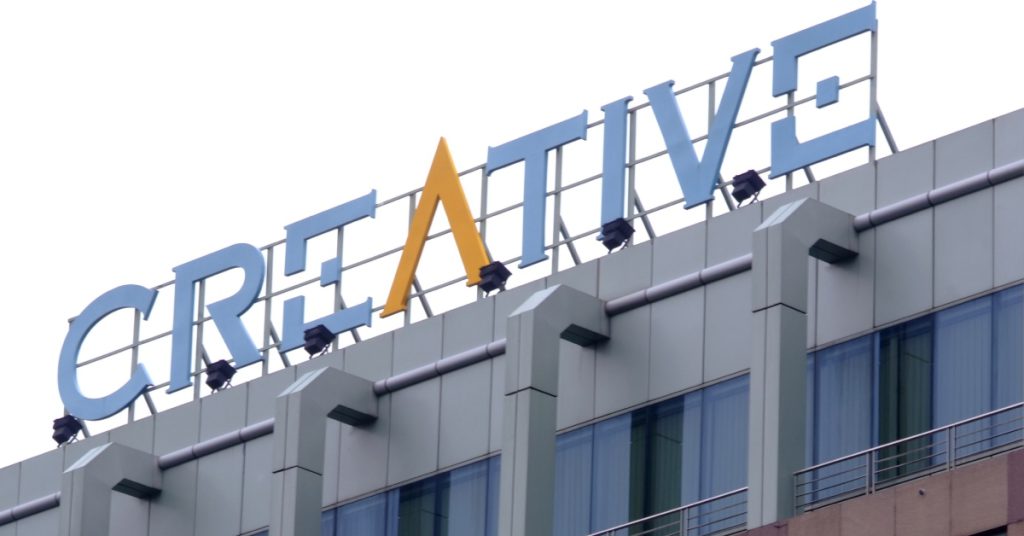
Singapore produced exactly one indigenous global consumer electronics brand in the late 20th century. At its peak it was worth billions of dollars, employed thousands of people, and was the first Singaporean company ever to list on the NASDAQ.
Then, given a clear chance to build silicon design capability at world scale, it elected not to take it. The next decade and a half saw the company completely fail to do the thing everyone expected it to do next, which was to go from audio to graphics. The man who ran it would later coin a phrase to describe his country’s reflexive caution: No U-Turn Syndrome, the refusal to act without permission, to take a risk the rule book hasn’t already sanctioned. He was, at the moment he wrote it, a working example of the thing he was lambasting.
This is a story about the failure of Creative Technology, and also a story about what the failure means for Singapore. The research for it took the better part of a year and ran across sources I could not have reached without help: the National Library of Singapore, two companies’ worth of a decade of annual reports, archived trade show coverage and Usenet archives, and an interview with a former Vice President of Creative.
First, a history
Creative Technology was founded in 1981 in Singapore by three men: Sim Wong Hoo, Ng Kai Wai, and Chay Kwong Soon. For the first seven years of its life, it made things that were interesting if not remarkable. Computer kits. The first peripheral memory board for the Apple II. A proprietary PC, the Cubic CT, aimed at the Singapore market and that failed almost immediately thanks to cheap PC clones from Taiwan and Hong Kong. By 1986, Sim was down to a handful of engineers and technicians, and, in his own later words, “the future looked bleak.” He pulled the sound board out of the dying Cubic CT, rebuilt it as a cheap standalone card, and brought it to a computer exhibit in the United States. “I took the thing out and made it into a very simple, low-cost music board, which we heavily protected, and it turned out to be good business because nobody had it.” In other words, the Sound Blaster, which was probably the first thing on your mind when you thought of Creative, was a salvage operation. It was rescued from a proprietary platform, and the company that grew around it was led by a founder who had a very bad experience with creating his own proprietary platform; this helps to explain what he did later.
Creative was a big deal because it was one of the very few indigenous Singaporean tech firms of its era, at a moment when Singapore’s industrial base was dominated by the branch plants of Hewlett-Packard, Texas Instruments, and Seagate, drawn by the Economic Development Board’s pursuit of multinationals. Creative was an oddity. It was Singaporean in origin, and it didn’t want to just make products for Singapore, but to make them for the world.
By 1989, the AdLib card had already established the idea that a PC could have real sound beyond the internal beeper, and the fragmented landscape of the DOS sound card market desperately needed a single standard. Creative’s move was to build a card that was “AdLib compatible” and which offered digital audio sampling that AdLib didn’t. They built it cheaper, in Singapore, using off-the-shelf Yamaha OPL chips and commodity parts, and they aggressively cultivated game publishers and developers. Within a few years, the standard went from “AdLib compatible” to “Sound Blaster compatible”; it was the audio Esperanto that every sound card had to speak. By September 1994 the company had 3,000 employees, was shipping 600,000 sound cards a month, held more than 60% of the global market, and was posting more than half a billion in annual sales and almost 100 million in profit. It had listed on NASDAQ in 1992, the first Singaporean company ever to do so, and in July 1994 came home to the Stock Exchange of Singapore at a market capitalisation of more than $1.6 billion. For a country whose national economic strategy had treated indigenous firms as a secondary priority, Creative was something like a proof of concept for a different Singapore, a national champion already being named among the likes of Taiwan’s UMC. (Before UMC was overshadowed by TSMC, of course.)
The graphics years
(If you came here looking for a more general history of the company, I’d redirect you to this video, made by my good friend Asianometry.)
Between 1995 and 2001, Creative put out five different graphics cards, each built on a different vendor’s silicon, almost none of them commercially significant, and the one that was, the 3D Blaster Voodoo2 in 1998, was significant not because of anything Creative did itself but because 3dfx’s Voodoo2 chip was so good that every board partner selling it made money for a year or two. The rest of the line was a march of failures.
The first one, the 3D Blaster VLB, launched in 1995, and used a cut-down version of 3DLabs’ GLINT chip. It was the only consumer card ever made with that chip. It used the VESA Local Bus, an old and dying slot standard that was being phased out in favour of PCI. It ran games through a proprietary DOS API called CGL, the Creative Graphics Library, which was supported by about a dozen titles total, almost all of them bundled into the box at launch. Sony said at Winter CES 1996 that the Glint chip was too slow; Diamond Multimedia’s Edge 3D was getting more attention. In July 1996, Creative wrote the card down as an inventory loss. Less than a year after launch, the 3D Blaster VLB was already pulled, and Sim used the announcement to pitch the successor card. A contemporary analyst was blunt: “At the beginning of this year, they said the 3D graphics Blaster was going to be the next thing to look out for. Now they tell us they have to make a charge for it.”
Its successor was the 3D Blaster PCI in 1996, which used Rendition’s Vérité V1000 chip. The V1000 was actually interesting, the first PC graphics card with a programmable RISC core, and it ran the first hardware-accelerated version of Quake, the game used as a litmus test for how powerful a graphics card was. But 3dfx’s Voodoo1 had already been released the same year, and Voodoo was immediately better. Rather than stick with Rendition, Creative switched chip vendors again in 1997, this time to Cirrus Logic’s Laguna 3D, and shipped the Graphics Blaster Eclipse. Creative’s vice president of graphics admitted that the Laguna card was more suitable for “general applications” than for games, while recommending the Rendition card for gaming instead; rather than commit to one card that was already struggling, they put out two.
Then in 1998, Creative became the first vendor to ship a 3dfx Voodoo2 board. Steven Mosher, then Creative’s VP of graphics, ran one of the more sophisticated commercial operations of the early GPU era to make it happen. Mosher convinced Sim to fund a 3dfx risk wafer, which got Creative the first hundred thousand Voodoo2 chips ahead of every competitor. He licensed the Voodoo2 name from 3dfx exclusively, paying a royalty for it; he had figured out that gamers were now buying chip brands, and that riding 3dfx’s identity was worth more than the 3D Blaster name. Then he engaged in some deception against Diamond Multimedia; Mosher had learned at SGI that consumers treat memory size as a proxy for performance even when it isn’t, and so he secretly planned a 12MB version while leaking through “3dfx buddies in engineering” that Creative was actually building 6MB. Diamond saw the supposed leak, configured their card at 8MB to beat it, and was caught when it turned out the card was 12MB.
The 3D Blaster Voodoo2 was the result. It was a hit. Creative’s graphics revenue nearly tripled, from roughly a hundred million in 1998 to roughly 260 million the next year, or 20% of the company’s revenues. This was the peak, but it was also the moment that showed what Creative’s graphics business actually was. The Voodoo2 success was real and earned, but every move that was made to ensure its success was downstream of Creative’s choice not to design silicon. Risk wafer financing, exclusive name licensing, memory-config deception, supply-chain warfare; these are the levers a brilliant board partner has when he can’t compete on the chip itself.
When the next generation of cards came around in 1999, Creative rebranded NVIDIA’s GeForce 256 reference design as the 3D Blaster Annihilator, and the press language they used was borrowed directly from NVIDIA’s own press kit. By 2000 graphics had dipped slightly to 15% of revenue, and by 2001 it had collapsed to 6%. That same year, Creative took an $8.2 million inventory writedown and stated that it was a result of “management’s decision to exit from [graphics and video.]”
Creative had concluded that graphics cards were not their business. They were right, for the business they were running. Distributing Voodoo2 boards is not the same thing as being 3dfx. In 1999, the year graphics revenue exploded, Creative’s overall gross margin fell from 31.3% to 27.2%, with the company attributing the decline specifically to “the increase in overall revenue contribution of lower-margin video and graphic products.” Graphics distribution was not very profitable. Graphics silicon design, which is what NVIDIA and ATI were doing, has more value-added, but Creative chose never to do that.
Not that Creative produced no graphics engineering at all. William Bilodeau and Michael Songy, two Creative employees, showcased a stencil-buffer shadow-volume technique at the Creativity ’99 developer conference that was real, original work. The algorithm was later repurposed famously by John Carmack for Doom 3. The way the technique was presented is instructive, though. Creative used it not to build a graphics franchise but as leverage; they reached an agreement with id Software under which id would implement EAX, Creative’s proprietary audio extension, in exchange for permission to use the technique in Doom 3. The one piece of graphics IP Creative produced was deployed to shore up their audio dominance.
The patent play
Creative had held a 20% stake in 3DLabs since 1994, taken to get early access to roadmap information and silicon. The 1995 3D Blaster VLB had come out of that relationship; so had the eight years of pressure on the graphics team to put Permedia products into the consumer channel against their recommendation. In May 2002, nine months after the formal graphics exit, Creative announced the acquisition of 3DLabs. The official rationale, as repeated in trade press and press releases at the time, was that Creative was re-entering graphics with a new focus on “revolutionary” consumer GPUs that would take on NVIDIA and ATI. But no GPUs actually launched. By 2005, Creative had written off $65.2 million of the 3DLabs goodwill as an impairment charge, attributed to “delays in the launch of new products.” 3DLabs retreated into professional workstation graphics, then in 2006 wound down even that and rebranded itself as ZiiLabs to pursue mobile processors. In November 2012, Creative closed the loop by selling parts of ZiiLabs to Intel and relicensing part of the GPU patent portfolio, for a combined $50 million.
The point of the acquisition was the patent portfolio. Here is what Sim had to say about the acquisition: “For the first time, we will own substantial graphics intellectual property and a formidable graphics patent portfolio that will allow us to achieve a higher level of returns for our efforts as we re-emphasise the graphics category.” He is not saying Creative will make new GPUs. He is saying that owning intellectual property will let Creative extract higher returns. Everything that followed is consistent with that reading. Under Creative’s ownership, 3DLabs produced, as far as I could tell, zero new patents. The patents that ZiiLabs would later famously use to pursue claims against Apple, Samsung, and others were built on 3DLabs’ old work. The key people from 3DLabs who had authored a lot of the old patent work had mostly left between 2003 and 2005.
This IP protection instinct was not a late deformation of some pure engineering culture. It was there in 1986, at the founding moment of the company, when Sim “heavily protected” his first music board against the Taiwanese cloners.
In the same fiscal year of 2000 that Creative took the $8.2 million writedown and walked out of consumer graphics, Creative spent $32 million buying Aureal Semiconductor out of bankruptcy. Aureal had been Creative’s only serious competitor in PC audio ever since AdLib was shuttered. Rather than continue investing in a risky industry, Creative consolidated their crown jewel that was already starting to suffer. They did not want to do a U-Turn.
The thing Creative actually knew how to do
I want to stress that Creative building a silicon design house was not some far stretch for the company. Creative absolutely knew how to build a silicon design house. They had already built one. They were running it, successfully, for the entire period covered by all the graphics failures. It was just focused on audio instead.
In 1993, Creative paid roughly $54 million for E-mu Systems, a synthesiser and sampler company founded in 1971 by Dave Rossum and Scott Wedge. Wedge left almost immediately after the deal closed, but Rossum, who was the technical half of the founding pair, stayed for eighteen years. He was appointed Director of what was internally called the Joint E-mu/Creative Technology Centre. In 1996 he was promoted to Creative’s Chief Scientist. Across the eighteen-year tenure, Rossum and his team in Scotts Valley put out five types of silicon that became Creative’s audio flagship products. The EMU8000 powered the AWE32 and AWE64 Sound Blasters from 1994 onward. The EMU10K1 powered the Sound Blaster Live! and housed the hardware engine for EAX in 1998. The EMU10K2 powered the Audigy. The EMU20K1 powered the X-Fi. Each chip was more ambitious than the one before it, a more powerful digital signal processor, higher polyphony, more memory, and faster buses.
Now, E-mu was kept as a separate unit. Rossum and his engineers stayed in their own building in Scotts Valley rather than move to Singapore or somewhere else. E-mu kept its own brand in the music-instrument market, continuing to put out samplers and sound modules to musicians. The silicon programme was funded by these two distinct revenue streams, and the brands did not pollute each other. If anything, E-mu press releases would emphasise “Creative’s lack of input” on certain product lines as a selling point.
This is what Creative could do when they committed. Acquire a company whose technical founder was world-class, keep him, keep his team, keep them making, protect their brand, let them run a long and good silicon roadmap that delivered new generations of chips every few years, and make an ecosystem around those chips; Creative ran an annual developer conference called Creativity from at least 1999; EAX grew to 300-plus supported PC games by the mid-2000s; Creative stewarded the OpenAL API from 2001 onward after Loki Software’s bankruptcy. It was the work of a company that understood building silicon very well, but just didn’t want to risk it for something else.
When you put E-mu and 3DLabs next to each other, it feels almost like a joke. 3DLabs got four years and all their brightest immediately left for NVIDIA or their own ventures, while E-mu got eighteen years and its technical founder as Chief Scientist of Creative.
Tronno!
It helps, here, to look at ATI Technologies, which is one comparison you can make. ATI was founded in 1985 in Markham, Ontario by three Hong Kong immigrants. None of them had the benefits of being American or being located in Silicon Valley. They had comparable capital access, CA$300,000 at founding, and had comparable foundry access to Creative. But they succeeded. By the late 1990s ATI was making Radeon cards that directly competed with NVIDIA. And by 2006, AMD paid $5.4 billion for the company. Creative had more capital, more revenue, more brand recognition, and the same access to the same foundries, but all their attempts at graphics ended up as either smoke or patent harvesting. Why?
The way the industrial models of both countries worked provides one answer. The University of Toronto had the Microelectronics Development Center, a government-funded facility with workstations and chip-design infrastructure; ATI hired Adrian Hartog, the engineer running it, away after three months of courtship. Above and around that was CMC Microsystems, under a National Science and Engineering Research Council initiative, which gave ATI cheap access to multi-project wafer runs and EDA tools. Canada’s Scientific Research and Experimental Development tax credit was extremely generous and broad and ATI used it to the maximum it could. While I couldn’t find figures for earlier years, between 2004 and 2007, around 15% of ATI’s entire R&D budget was from SR&ED. When you combine it with the Ontario Innovation Tax Credit, it was closer to 20%, and the figure was certainly far higher in the earliest years of ATI. A single year of ATI’s SR&ED benefit in the mid-2000s was roughly three-quarters of Creative’s total peak-era R&D budget.
Let us compare to Singapore. Singapore had nothing even close to the MDC or CMC when Creative was founded; the Institute of Microelectronics was only founded in the 1990s, and was much more focused on research, and only began offering any type of multi-project wafers to startups in the 2010s. This is despite semiconductors and ICs being one of Singapore’s biggest exports. Singapore’s equivalent to SR&ED was the Research Incentive Scheme for Companies; the RISC was much less generous and tech-neutral, and more gated and sector-directed. It gave around $186 million to Creative over five years, and it was specifically for “Multimedia and communications technology.”
Do not name errors lest you share them
In Sim’s autobiography, Chaotic Thoughts from the Old Millennium, he coined the phrase that this very article begins with. NUTS describes a specific kind of Singaporean behaviour: a reflexive deference to authority, no willingness to take a risk the rule book hasn’t sanctioned, the name coming from Sim stating that Singaporeans would sit at a junction waiting for the signage to tell them they could turn around, rather than checking whether it was allowed by default. He extended it to everything about the country. It was a critique of a culture he thought was being held back by its own caution.
In that same book, Sim also wrote this: “If I were to leave Creative and you gave me all the money in the world, I would still never dare to compete with Creative in this area.”
Creative had been shipping graphics cards for four years when the autobiography came out. The 3D Blaster Annihilator had just launched. Sim, writing about the one area where his company was structurally dominant, frames it as the only area worth being in. This framing, where the company’s dominance in audio is the only possible answer to every strategic question, is what produced not only graphics failures, but the later failures of the company. Creative’s one sustained silicon design effort stayed inside audio because Sim could not imagine committing that seriously to anything else. He did not want to U-Turn.
I do not think this is hypocrisy; that implies he did not believe what he was writing. I think that naming a pathology is not the same as treating it, and also that this is a Singaporean intellectual move where identifying the cage gives one a kind of licence to keep living in it.
The company would later realise that being wholly dependent on audio would result in its fall from grace, its attempt at fighting Apple and its iPod a failure, and the entire concept of a PC needing a sound card becoming increasingly out of tune.
What Creative can tell us about Singapore is a matter of both model and culture. The Singaporean model is more manufacturing-driven than the country’s reputation might imply; the manufacturing share of GDP is higher than Germany’s. But it is a specific type of manufacturing, one that can’t seem to get past the middle part of any value chain. Singapore can say it occupies a place higher than Malaysia’s when it comes to semiconductors, but ultimately it is still downstream of Taiwan, South Korea, Japan and increasingly China. Soon, Singapore may not be able to say it sits above Malaysia either.
It is also about culture. The NUTS problem is still acute, and while people talk about it, no one seems intent on actually changing it. The Prime Minister seems content to say that Singapore has “had the reputation for being creative. Passing exams, yes, but being creative, not so,” while ignoring the structural issues behind the problem.
Sim Wong Hoo died on 4 January 2023, four months short of his seventieth birthday. The card he never built belongs, by now, to NVIDIA, which is by market capitalisation one of the largest companies in the world. Creative is a company worth $36 million with roughly 280 total employees, fewer than the four hundred R&D engineers it specifically employed in September 1994. It licenses some fraction of its original audio patents and sells Sound Blasters to a loyal but shrinking enthusiast and audiophile market that is shifting to external DACs anyway.
The syndrome he named got his company in the end.
This article is my first attempt to write with a more...combative voice, so to say. For the first time, I will also be including a bibliography.